
Say less about the technology.
Say more about the urgent need.
For AI-native seed-stage founders whose distribution won't compound and whose first customer wins won't reproduce, Seiless installs the positioning architecture that makes PMF detectable, GTM repeatable, and every channel they run actually compound.

Problem
You've been debugging the distribution & PMF problem. The bug is in the foundation.
The natural response to distribution stalling and PMF refusing to stick is to treat both like a system problem. Try a different channel. Run a new experiment. Tighten the ICP filter. Redesign the onboarding flow. Each attempt is logical and each one produces the same result: a spike that doesn't hold, a channel that works once, a growth loop that flatlines before it compounds, a customer pattern that won't repeat.
That pattern isn't a signal that you haven't found the right tactic yet. It's a signal that every tactic has been running on top of a foundation that was never built. The message keeps leading with what the technology does because there's no anchor to the urgent need underneath it. You're not running bad experiments. You're running well-designed experiments on top of nothing.
The bug isn't in the execution layer. It's in the layer that makes execution work. Until there's a documented answer to who the product is actually for, why those buyers choose it over every alternative in their mind, and what to communicate so the win is repeatable, every fix aimed at the output is fixing the wrong thing.


Shipping more product
The engineering reflex says the product isn't converting because it isn't ready enough. The product gets better and the distribution problem stays exactly where it was.

Trying a new channel
You switch from content to outbound, outbound to paid, paid to partnerships. Each produces the same result because the foundation underneath hasn't changed.

Rewriting the messaging
You rewrite the salespage, the pitch deck, the one-liner. The messaging keeps drifting because there's no strategic spine underneath it to write against.

Delegating to AI
You use agents to generate the strategy, write the copy, and plan the distribution. The output is clean, fast, and built on a foundation that still isn't there.
What's Missing
The foundation isn't missing by accident. It's missing because the direction you would build it from can't produce one.
The default move is to build your product positioning & messaging from what you know best. What you built, what it does, why it's better than the version that existed before it. It's the natural direction because it's the direction you know the product from.
The problem is that direction doesn't produce a foundation. It produces a description. A description of the technology can't anchor to what your ICP urgently needs, the alternatives already sitting in their head, or the position the product has to occupy relative to those alternatives. Distribution can't compound on a description, and PMF can't repeat against one. There's nothing underneath them to compound or repeat against.
The foundation that holds is built in the opposite direction. From the ICP's reality back to the product, not from the product out to the ICP. That's the layer that hasn't been built yet.


Only solution position

Unique differentiation

Competitive intelligence

Audience precision
Solution
Outside-in positioning + depositioning. One architecture, two operations, built in the direction that produces a foundation.
The mechanism that produces the foundation is a documented architecture running two operations in sequence. Positioning and depositioning. Not parallel systems. One architecture with two jobs that only work when both are installed.
Positioning anchors the product to the ICP's urgent need instead of the founder's intent. It defines who the product is actually for, what they're trying to resolve, and the only-solution position the product holds against that need. Built outside-in. From the ICP's reality back to the product, not from the product out toward the buyer.
Depositioning unbinds the ICP from the alternatives already running in their head. The competitors they're comparing against, the foundation models they could call directly, the doing-nothing default. Without that unbind, the only-solution position has nothing to land against, and every conversion attempt runs the same uphill loop from scratch.

PMF becomes detectable

Distribution compounds instead of resets

A defined ICP anchored to buyer psychology, not guesswork

GTM becomes repeatable

Only solution position installs in the ICP's mind

Competitive advantage that holds under pressure

A strategic spine every channel, page, and message loads onto
Introducing
The Positioning Sprint. A 4-week engagement that installs the foundation, then ships the assets it lives inside.
The Positioning Sprint runs in two layers.
Layer 1 builds the foundation. The outside-in positioning and depositioning architecture that defines who the product is actually for, why those buyers choose it over every alternative in their head, and the only-solution position it holds.
Layer 2 deploys it. Messaging architecture, brand identity, and one live conversion page, all shipped against the same strategic spine so the foundation isn't sitting in a Notion doc, it's running in the market.
Scoped to 4 weeks. Exit-conditioned. Not a retainer, not a campaign, not a six-month experiment that quietly turns into one. When it ends, the documented foundation is yours, the deployed assets are yours, and 30 days of strategic advisory carries the foundation into the channels and conversations that follow.

Competitive Intelligence
Maps every alternative the ICP is currently bound to and identifies exactly where each competitor's positioning is structurally vulnerable.

ICP Psychology Profile
Defines the target beyond demographics to capture the belief structure and psychological drivers that govern their urgent need.

Sweet Spot Venn
Isolates the territory where your product's strongest advantage meets the ICP's most urgent need without overlapping any competitor's claim.

Depositioning Architecture
Designs the sequence that separates the ICP from competitors before any brand claim is made so positioning lands on cleared ground.
Positioning Architecture
The 10-step outside-in positioning and depositioning system. Defines who the product is actually for, anchors it to the ICP's urgent need, and installs the only-solution position against every alternative already running in their head. This is the strategic core everything else in the engagement loads onto.

River of No Mapping
Inventories every objection, hesitation, & question the buyer carries and places the exact answer at the exact touchpoint where it needs to land.

Linear Connectivity Audit
Ensures the promise that earned the click is the first thing the ICP sees on arrival so no touchpoint breaks the chain the previous one built.

Socratic Deployment Plan
Builds a system of strategic questions that guide the ICP to the conclusion themselves because self-generated conclusions are the only ones that hold.

Concealed Persuasion Deployment
Deploys subconscious-level mechanics across pricing, copy, & framing so resistance dissolves before the conscious mind gets a chance to evaluate.
Messaging Architecture
The deployed application of the positioning. Strategy becomes the specific words, sequences, and persuasion mechanics that run across every touchpoint. Every objection gets answered in the right place, every channel carries the same spine, and every line is traceable back to the architecture instead of improvised in the moment.
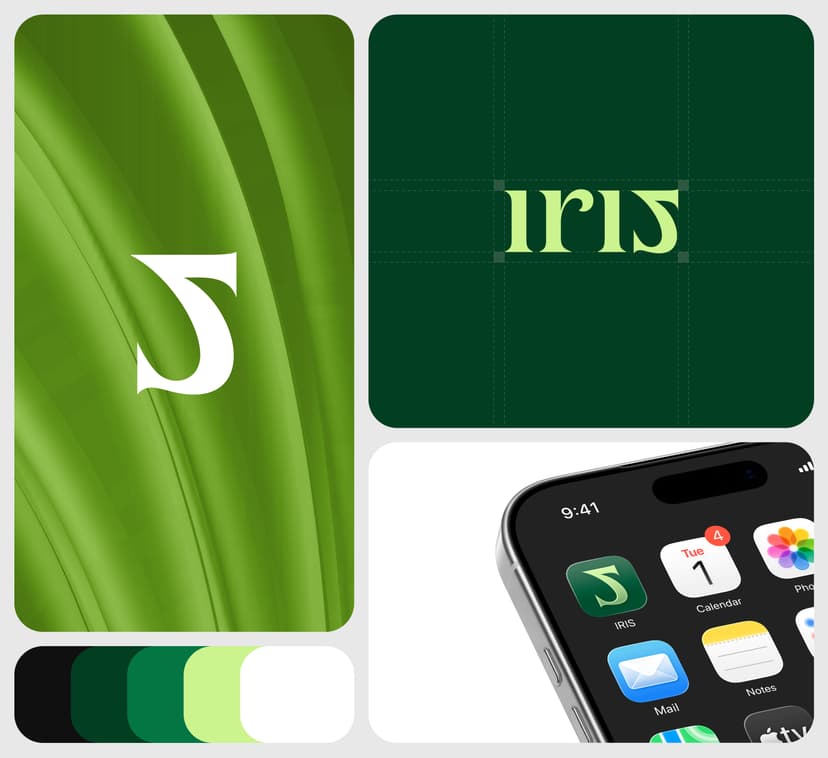
Brand Identity System
The visual and verbal translation of the positioning. Verbal identity, tone of voice, logo, typography, color, and brand assets, all built as a system the team can apply consistently without a designer in the room every time. Identity reinforces the strategic spine or it gets cut.

One Deployed Page
One live page, one job, zero distractions. Built against the same strategic spine as everything else, engineered to perform from the moment traffic hits it. Homepage or dedicated landing page, the right call gets made in discovery based on the traffic strategy. Fast, trackable, testable, live the day the engagement ends.
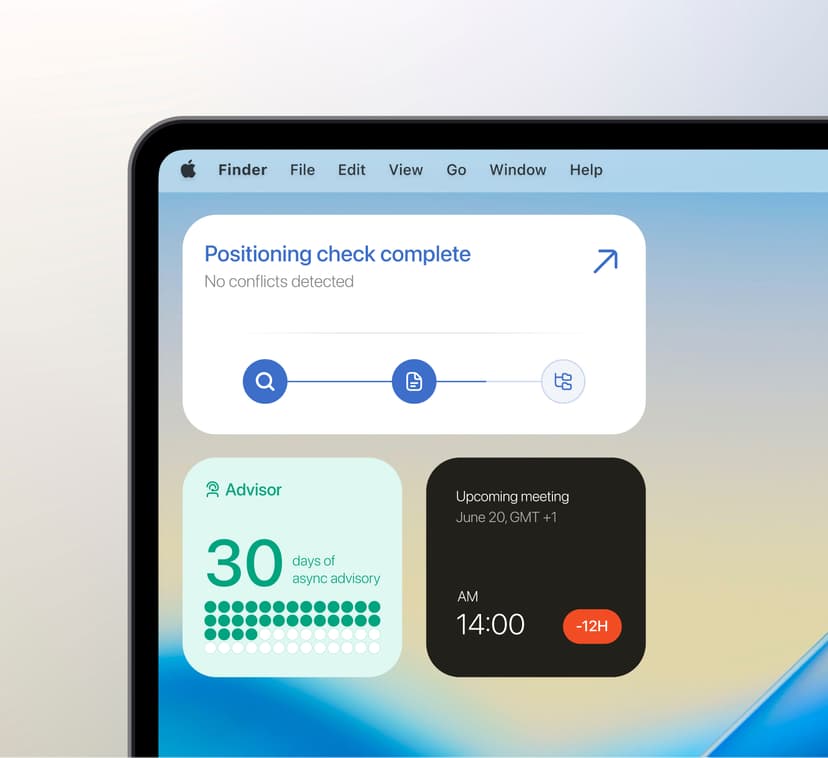
30-Day Positioning Advisor
30 days of async strategic advisory after the page goes live. Loom or written response within 24 hours, no required cadence. Copy changes, investor questions, new channel decisions, structural pivots, all stress-tested against the foundation so the architecture stays reinforced through the first 30 days instead of quietly undermined.
Process
4 weeks, 4 phases, 1 sequence. Each week's output is the next week's input.
The order isn't a preference. It's the only order that produces a foundation that holds. Research feeds positioning. Positioning feeds messaging. Messaging feeds identity. Identity feeds the deployed page. Run the sequence in any other direction and what gets built downstream loses the anchor it needs to load onto.
Scoped to 4 weeks for a reason. Any longer and the engagement turns into a retainer in disguise. Any shorter and the foundation gets compressed past the point where it holds. 4 weeks is the window where each phase has enough depth to produce real output and enough pressure to keep the work moving.

Week 1: Research & Intelligence
Target intelligence, competitive landscape audit, marketing environment classification, and buyer awareness mapping. The raw material the foundation gets built from.

Week 2: Positioning & Messaging
Research synthesizes into the positioning platform, the sweet spot venn, and the depositioning architecture. Messaging architecture deploys the platform into specific words, sequences, and persuasion mechanics.

Week 3: Brand Identity
Verbal identity, logo system, typography, color, and brand asset library. Built against the strategic spine, not separately from it.

Week 4: Live Page
Copywriting, design, development, launch. The page ships against the same strategic spine as everything before it. The foundation goes live in the market.
In Action
From buried differentiator to deployed foundation. End-to-end on Pond.
Pond is a textbook example of the positioning problem this methodology was built to solve. Real product, urgent problem, working technology. Differentiator buried under generic brand and feature-first messaging. The exact gap between what the product actually does and what the market hears about it.
So we ran the methodology on them, self-initiated, end-to-end. Positioning, brand identity, home page design, home page messaging, all built against the same strategic spine. A worked example, built so the methodology is reviewable in something real instead of described in the abstract.



Guarantee
The methodology either earns the engagement or fully refunds it.
100%
At the end of the positioning phase, one question gets asked. Did the methodology surface only what you could have figured out on your own? If the answer is yes, the full engagement fee is refunded. Every deliverable produced during positioning stays with you. You owe nothing.
Two engagements per month. The cap keeps the entire team's focus locked onto two brands at a time, with nothing else pulling at the work. Undivided focus is what produces a foundation that holds.
Engagement
One investment. Full engagement. No upsells, no scope creep, no retainer in disguise.
The 4-week scope is fixed. The deliverables are fixed. The team is fixed. No upsell pricing, no premium add-ons, no retainer that quietly continues after the work ships. The engagement is scoped and exit-conditioned.


FAQ
The questions that come up before the engagement starts
We don't have PMF yet, shouldn't we figure that out first?
You haven't worked with startups exactly like ours, how do we know you understand our space?
Can't we just do this ourselves? We have AI tools, frameworks, and time on weekends.
What happens after the 4 weeks end?
What's explicitly not included?